Architectural Time: The Technical and Soulful Essence of Marés Stone in Mallorca
vintagia · 30 de agosto de 2026
A technical analysis of Balearic calcarenite, from its geological formation and historic quarrying to its enduring relevance in contemporary high-end architecture.
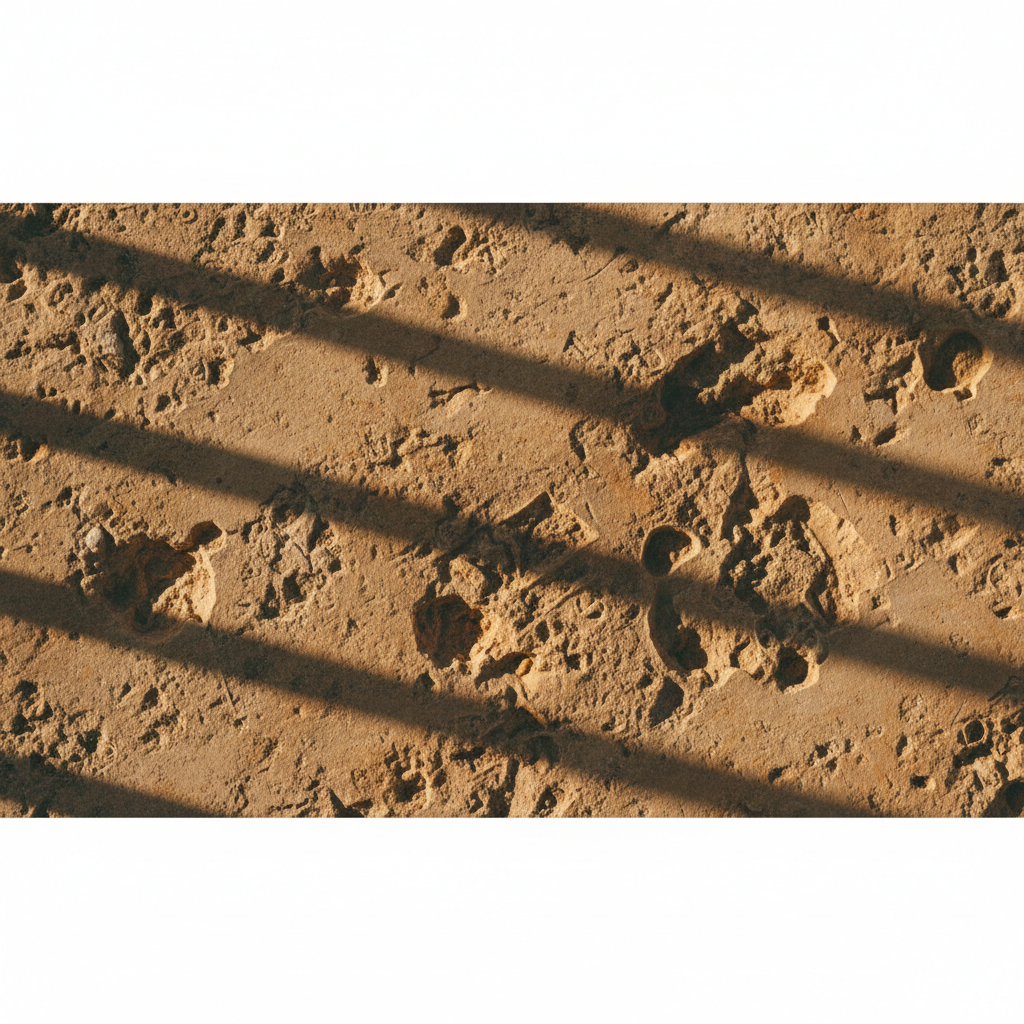
The physiognomy of the Balearic Islands, and Mallorca in particular, is defined not by form but by matter. Marés, a calcarenite rock composed of marine organism fragments and quartz grains cemented by calcium carbonate, serves as the island's connective tissue. From the Gothic buttresses of Palma Cathedral to the minimalist villas overlooking the cliffs of Deià, this stone is more than a building material; it is a geological and cultural record defining the identity of the Western Mediterranean.
Geology and Extraction: The Origins of Mallorca Marés Stone
Geologically, marés is a sedimentary rock from the Miocene and Pliocene epochs. Its formation results from the accumulation of fossilized dunes and marine deposits. This genesis grants the stone its signature properties: high porosity, moderate density, and a soft texture that facilitates precise carving—a characteristic that has allowed its extensive use for centuries. Unlike granite or marble, marés is soft at the moment of extraction, hardening only upon contact with the air through a process of carbonation.
Marés quarries, locally known as *pedreres*, represent some of the most striking human interventions in the Balearic landscape. Historically, extraction was performed manually using tools like the *escoda* to mark the blocks. This method left vertical walls of geometric precision that today resemble excavated temples. According to records from the Balearic Islands' Directorate General for Energy and Mines, contemporary industrial exploitation has mechanized the process with large disc saws. However, the classification of the material still depends on the vein and grain: ranging from the fine Santanyí marés, prized for its homogeneity, to the more rustic and porous varieties found in the eastern regions.
Technical Properties and Hygrothermal Performance
From an architectural engineering perspective, marés is notable for its thermal inertia. In a climate characterized by scorching summers and humid winters, the stone acts as a natural regulator. Its porosity allows it to 'breathe,' managing the exchange of water vapor between the interior and exterior. This forms the foundation of sustainable marés construction: a 'zero-kilometer' material with a carbon footprint significantly lower than that of reinforced concrete.
However, its application demands a profound understanding of construction pathology. As a carbonate-rich stone, it is vulnerable to wind erosion and salt crystallization (efflorescence). The traditional technique of *estucat de calç* (lime plaster) has historically been its best ally. In our editorial view, the contemporary trend of leaving marés exposed in exteriors without protection is an aesthetic choice that often overlooks long-term durability, sacrificing structural integrity for a patina of premature decay that is not always desirable.
Balearic Vernacular Architecture and Contemporary Reinterpretation
Marés techniques have evolved from massive load-bearing walls to precision cladding. In Balearic vernacular architecture, wall thickness was the primary guarantee of stability and insulation. Mallorcan *possesió* estates utilized large-scale blocks set with lean mortars of lime and sand sourced from the quarry itself.
Today, internationally renowned architectural firms have reclaimed marés for projects seeking absolute integration into the landscape. It is no longer just about building with stone, but about understanding the tectonics of the site. Modern applications include:
- Mechanical Lattices: CNC (Computer Numerical Control) cutting allows for the creation of light filters that protect interiors from direct sun while maintaining natural ventilation.
- Ventilated Cladding: The use of marés panels on contemporary facades allows for the utilization of its aesthetic qualities without overloading the structure.
- Continuous Flooring: Treated with advanced water repellents, marés floors provide visual continuity between the interior and the garden, blurring the boundaries of the home.
Sustainability and the Craft of the 'Trencador'
The relevance of marés is intrinsically linked to the survival of the craft. The *trencador* (the quarryman) is the custodian of knowledge that is increasingly rare. Selecting the correct block, understanding the 'law' of the stone (its natural orientation within the strata), and the specific laying technique are fundamental to avoiding settlement cracks.
From the Vintagia editorial perspective, we believe the revival of marés should not be viewed as an exercise in nostalgia, but as a technical necessity in the era of energy efficiency. A marés wall does not merely age with dignity, acquiring ochre and golden hues; it offers a passive response to climatic demands that artificial systems only achieve through high energy consumption. Just as in mechanical conservation, where it is crucial to understand El Cuaderno to ensure its future viability, in stone architecture it is imperative to audit the provenance and treatment of the material to guarantee its longevity.
Marés stone is, ultimately, the sediment of Mallorcan history. Its use in the construction of exceptional properties is not merely a design choice, but a commitment to the island's geography. In a world of synthetic and standardized materials, the irregularity and warmth of marés remain as the final authentic luxury: that of the unrepeatable.
Reading a marés wall before you buy
In a historic property, the wall speaks before the land registry does. Healthy marés shows an even grain, with no powdery disaggregation coming off under your hand and no black sulphation crusts in areas sheltered from rain. Vertical cracks running across several courses usually point to ground settlement; horizontal ones suggest corroding embedded metal or badly distributed compression over lintels. Always inspect the base of the wall: rising damp, made worse by impermeable Portland cement plinths, is the most common pathology and the most expensive to reverse, since it forces you to strip back the wall and restore its ability to breathe.
Provenance matters as much as condition. Fine-grained golden marés from Santanyí does not behave like the coarser, more porous stone from the eastern quarries. When restoring, the rule is to replace stone with stone of compatible hardness and absorption: a harder block concentrates stress and hastens the decay of its neighbours. Mortars must be lime, never cement; lime is sacrificial, yielding before the stone does and protecting the fabric.
Marés, value and permanence
In the Mediterranean market for singular properties, native stone is no longer a construction detail but an argument for value. A house built in marés and maintained with judgement holds something new construction cannot manufacture: accumulated time. Extraction licences are now limited and active quarries scarce, so reclaimed marés from demolitions commands prices that would have seemed implausible twenty years ago.
The informed buyer no longer asks only about square metres and views; they ask where the stone came from, which mortar was used in the last intervention, and who signed off the restoration. That documentary demand — identical in spirit to the one we apply to a collector automobile — is what separates a beautiful house from a house that will endure.
Sources
Read the Spanish edition: La arquitectura del tiempo: La técnica y el alma del marés en Mallorca.